
Gophics — a bespectacled gopher studying in a gothic library, holding a gear atop a book labelled GOPHICS

Cross-platform native UI, in pure Go

One codebase on desktop, web, iOS, Android — even a terminal — and the only app UI you can test headlessly with go test.

Gophics brings the rendering pipeline behind the best cross-platform UIs — immutable widgets, element reconciliation, constraint layout, GPU compositing — to idiomatic Go, and draws every pixel itself, so it looks the same on every screen. No Dart, no JavaScript, no webview, no SDK. Zero CGo.

// Counter is a widget: a plain struct value describing what to show.
type Counter struct{ Start int }

func (Counter) CreateState() widget.State { return &counterState{} }

// counterState holds what changes. StateBase[Counter] gives it SetState and a
// typed W() — the current Counter value, with no cast.
type counterState struct {
	widget.StateBase[Counter]
	n int
}

func (s *counterState) Init(widget.Ctx) { s.n = s.W().Start }

func (s *counterState) Build(ctx widget.Ctx) widget.Widget {
	th := theme.Of(ctx)
	return widget.Center(widget.Column(
		widget.Text{S: "TAPS", Size: th.Type.Caption, Color: th.Muted},
		widget.Sized{H: 4},
		widget.Text{
			S:     fmt.Sprintf("%d", s.n),
			Size:  th.Type.Display,
			Font:  theme.FontBold,
			Color: th.Text,
		},
		widget.Sized{H: 18},
		theme.Button{
			Label:   "Increment",
			Primary: true,
			OnTap:   func() { s.SetState(func() { s.n++ }) },
		},
	))
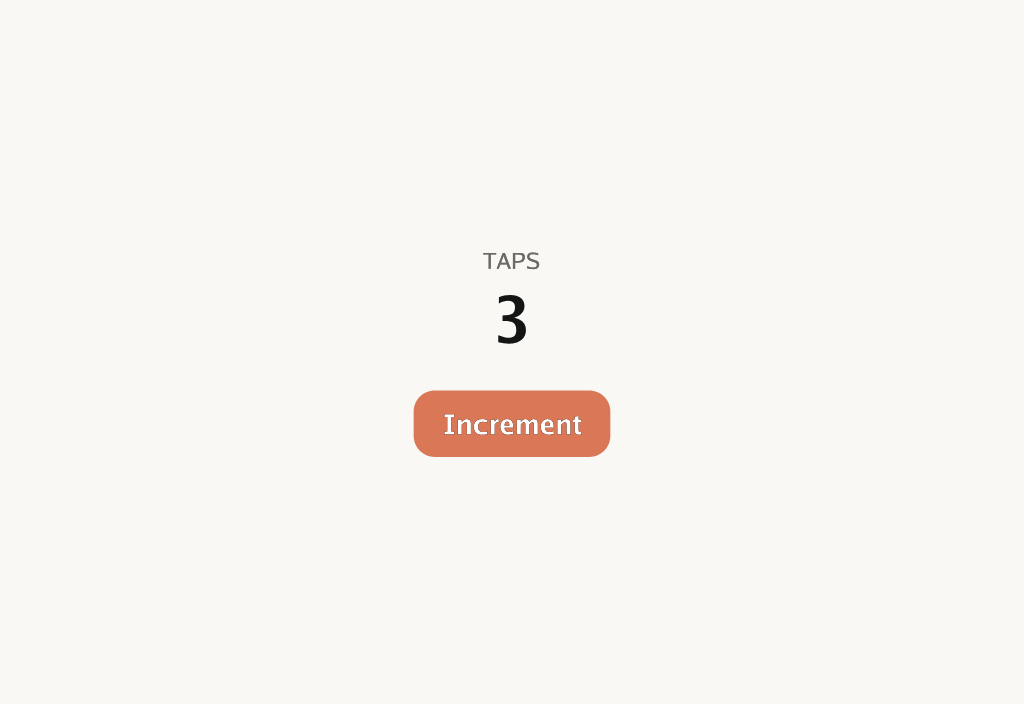
The counter app rendered by Gophics: a TAPS label, the number 3 in bold, and a clay-colored Increment button
Left: the whole program (full source). Right: what it draws — rendered headlessly, with no display and no GPU, by the same renderer that paints it on screen. That is how every screenshot on this site is made, and how you test your own UI.

Why Gophics

It borrows the architecture behind the best cross-platform UIs, not their APIs — and leans into what Go does that Dart and JavaScript can't.

One binary, every screen

CGO_ENABLED=0 everywhere. Same code, one static binary — desktop, web, iOS, Android, even a terminal — pixel-identical. GOOS=windows go build from a Mac. No runtime, no webview.

A library, not a platform

Gophics is a go.mod line. Pop a window from a CLI, embed a live UI in a server, add a viz pane to a pipeline — the programs an app-owning SDK can't serve. And platform services — file picker, share, notifications, clipboard, secure storage, IME — are plain ctx.<Cap>() calls that degrade cleanly where a host doesn't offer them.

Your UI is go test

Golden-image tests, headless and deterministic. A server can render a widget tree straight to a PNG. No emulator, no device farm — assert on your UI like any other code.

One language, top to bottom

Go end to end — no codegen, no context-switch. You inherit Go's infra, data, and networking ecosystem, which is exactly where these apps live.

Where it fits

Most cross-platform stacks make you pick two of three. Gophics takes the corner nobody else occupies.

Webview wrappers

Wails, Tauri, Electron — near-single-binary, but you write JS/HTML and inherit each platform's webview quirks.

Native-widget bridges

React Native — real OS widgets, but a JS bridge and per-platform inconsistencies to chase.

Own-rendering SDKs

Flutter, Compose — pixel-perfect and consistent, but a whole SDK and a new language.

Gophics

Pure Go, own-rendering, single-binary, headless-testable — that consistency, without leaving Go.

Honest status

Young and moving fast — so, the real caveats up front (the architecture is the hard part, and it's done):

Web ships the renderer

A WASM build carries the whole rendering stack. Every demo here lands between 3.4 and 3.9 MB gzipped — a networked client, a roguelike and an EPUB reader all within half a megabyte of each other, because the floor is the renderer and your code is a rounding error on it. That is an application download, not a web-page one: right for an app, wrong for a content site.

No hot reload

Go can't match the Dart VM — the answer is fast rebuild + an opt-in state snapshot ("hot restart that remembers") and headless preview. Not sub-second; close.

The catalog compounds

You compose primitives rather than assemble hundreds of pre-built widgets. It grows every release, and app-specific widgets are cheap to write.

Bridges are filling in

The capability layer — clean Go interfaces, generated wiring, graceful degradation — ships and its web impls are browser-verified; the native desktop/mobile leaves (objc, portals, COM, Kotlin, Swift) land per release. Missing bridges read as nil, so the UI just hides the affordance.